The demand for heavy duty gantry cranes in cold climate regions such as Russia and Northern Europe continues to grow as industrial expansion accelerates in Arctic ports, mining sites, offshore yards, and heavy fabrication facilities. However, designing and operating gantry cranes in extreme low-temperature environments requires thoughtful customization beyond conventional specifications. This article explores the critical factors, key challenges, and innovative solutions for customizing heavy duty gantry cranes that thrive in sub-zero climates while delivering high reliability, safety, and uptime.
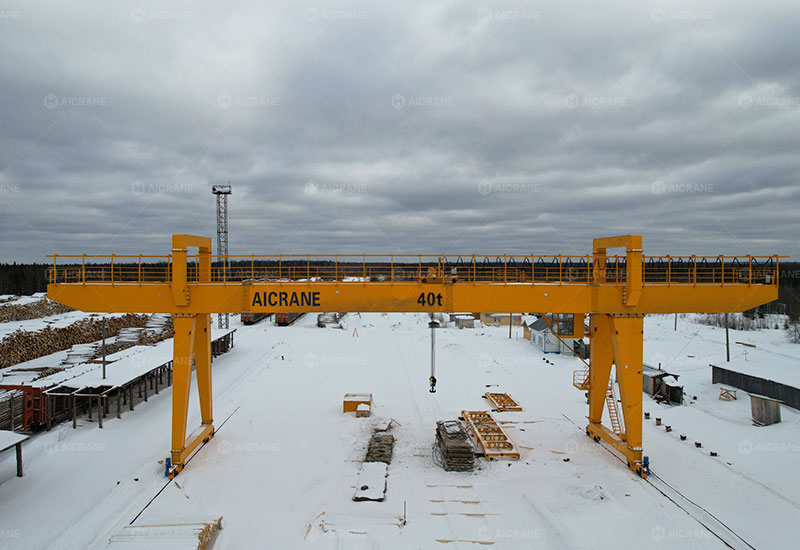
1. Understanding Cold Climate Challenges
Operating in severe winter conditions exposes heavy duty gantry cranes to a unique set of environmental stresses:
❄ Low Temperatures
Ambient temperatures in regions of Russia and Northern Europe can plunge below −40 °C. Standard steel, electrical components, and lubricants can become brittle or lose performance capability at these levels.
☃ Ice, Snow, and Frost Accumulation
Persistent snow, sleet, and ice buildup on structural members, wheels, and control surfaces can impede movement and create unsafe conditions.
💨 Wind and Storm Loads
Coastal ports and exposed inland sites often experience strong winds, blowing snow, and extreme weather events, which contribute dynamic loads that influence crane design.
🔌 Electrical System Stress
Moisture ingress, ice formation, and temperature cycling can degrade insulation, wiring, sensors, and electronics, negatively impacting control systems.
🧊 Mechanical Wear
Cold affects mechanical interfaces, increasing friction, shrinking tolerances, and accelerating fatigue in moving components.
These unique factors must inform every aspect of customization — from base materials to power systems and operator comfort.
2. Material Selection & Structural Modifications
Selecting the right materials and making structural adjustments are fundamental to cold climate outdoor gantry crane design:
High-Performance Low-Temperature Steel
Standard structural steel loses ductility in sub-zero temperatures, increasing fracture risk. For cold climate cranes:
-
Normalized or fine-grain steels with proven low-temperature toughness (e.g., ASTM A572 or equivalent classes with Charpy impact properties at −40 °C or lower) are preferred.
-
Pre-qualified weld consumables ensure weld zones retain toughness and are resistant to brittle fracture under thermal stress.
Thermal Stress Analysis
Engineering analysis must include:
-
Cold shock simulations
-
Expansion and contraction cycles
-
Stress concentration mapping
Heavy duty crane frames and main girders are optimized to resist fatigue and fracture from severe temperature fluctuations.
Cold-Resistant Paint & Surface Protection
Special coatings preserve steel against:
-
Ice adhesion
-
Corrosive salt (in coastal Northern Europe ports)
-
Abrasion from frozen precipitation
Insulated anti-icing pads or heat trace elements can be integrated into high-risk zones to prevent ice build-up.
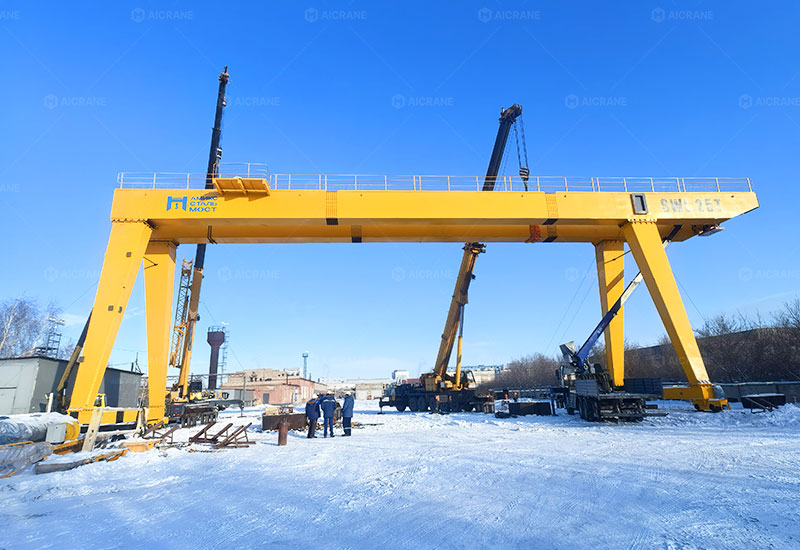
3. Enhanced Electrical & Control Systems
Electrical systems are especially sensitive to extreme cold.
Cold-Rated Cables and Connectors
Standard cables become stiff and brittle in low temperatures. Crane designers specify:
-
Low-temperature flexible cable jackets
-
Cold-rated insulation
-
Sealed connectors with moisture and ice barriers
Climate-Controlled Electrical Cabinets
Electronics, frequency drives, and PLCs require:
-
Heated enclosures
-
Temperature and humidity control
-
Internal circulation with filtered ventilation when needed
These features protect against condensation and frost at power and control nodes.
Redundant Sensors for Reliability
Standard load cells, limit switches, and position encoders may fail in extreme environments. Upgraded systems include:
-
Redundant sensing
-
Cold-rated encoders
-
Robust limit switch guards
-
Real-time self-diagnostics with remote monitoring
Remote telemetry ensures maintenance teams can proactively address issues before failures occur.
4. Bearings, Wheels & Motion Components
Mechanical motion systems endure additional strain in cold environments.
Low-Temperature Greases & Lubrication Systems
Conventional lubricants thicken and lose flow properties in freezing conditions. Heavy duty gantry cranes use:
-
Synthetic low-temperature greases
-
Automatic centralized lubrication systems
-
Heat trace lines for critical bearings
These measures ensure continuous lubrication of wheel bearings, slewing rings, and guiding rails.
Cold-Adapted Wheel and Rail Configurations
To maintain smooth travel:
-
Wheels and rails are machined and tolerance-checked with thermal contraction allowances.
-
Sealed precision bearings keep out ice and contaminants.
-
Snow scraper attachments and brush guards minimize build-up around wheels and rails.
5. Cab & Operator Comfort Solutions
Human factors are pivotal in safe crane operation:
Insulated Operator Cabins
Sub-zero temperatures and high winds demand:
-
Thermally insulated cabins
-
Efficient heating with defrost systems
-
Ergonomically designed seats and controls
Large panoramic, double-glazed windows reduce heat loss while maximizing visibility.
Remote Control & Automation Options
In ultra-cold conditions where human presence is risky, remote operation becomes essential:
-
Radio remote controls
-
CCTV with anti-icing housings
-
Semi-automated load positioning systems
These reduce exposure to cold while increasing productivity.
6. Extreme Weather Testing & Certification
Before deployment, cold climate gantry cranes undergo rigorous validation:
Factory Acceptance Testing (FAT)
Simulated low-temperature testing ensures components and systems perform as specified:
-
Cold chambers
-
Dynamic load testing
-
Control system freeze cycles
Site Acceptance Testing (SAT)
Once installed, field tests confirm:
-
Movement and load handling at ambient low temps
-
Heater and insulation system performance
-
Electrical and motion systems under real conditions
In regions like Russia and Scandinavia, compliance with local standards such as GOST, STO, and EN ISO is critical.
7. Safety Customizations for Harsh Environments
Safety features tailored for cold environments include:
Anti-Slip Access Platforms
Ladder rungs, platforms, and walkways are fitted with:
-
Textured surfaces
-
Heated strips
-
Drain systems to prevent ice ponds
Emergency Warm-Up Systems
In event of power loss:
-
Backup heaters
-
Uninterruptible power supplies (UPS) for controls
-
Insulated refuge zones for operators
These reduce risk during extended outages in freezing weather.
Lighting & Visibility Enhancements
Short days and low-light conditions in winter require:
-
High-intensity LEDs
-
Wide-angle coverage
-
Low-temperature rated fixtures
8. Maintenance Strategies for Cold Climate Cranes
Designed reliability must be matched by proactive maintenance.
Winter-Ready Maintenance Protocols
Scheduled inspections focus on:
-
Lubrication status
-
Heater and insulation integrity
-
Ice accumulation and sensitivity zones
-
Cable and sensor performance
Predictive Monitoring
Wireless sensors on critical bearings, drives, and structural points help identify issues before failures occur – vital in remote facilities or harsh winter months.
9. Case Applications
While specific proprietary examples are confidential, typical cold climate heavy duty gantry crane applications include:
-
Arctic port container terminals
-
Oil & gas module fabrication yards
-
Large mining loading stations
-
Heavy machinery assembly plants
-
Hydropower and steel fabrication facilities
In each setting, climate customization ensures industrial gantry cranes function reliably despite months of sub-zero weather.
10. Choosing the Right Supplier for Cold Climate Customization
Selecting a partner with proven expertise in cold climate crane engineering is essential. Key decision criteria include:
-
Design experience in Russia/Northern Europe
-
Cold environment material and control system know-how
-
Testing and certification capability
-
Remote support and service networks
-
Documentation in local standards and languages
Collaboration between client and supplier ensures requirements align with environment and operational goals.
Conclusion
Cold climate heavy duty gantry crane customization is not an option — it’s a necessity for safe, reliable, and efficient operation in Russia and Northern Europe. By addressing material performance, electrical resilience, motion systems, operator comfort, safety features, and maintenance strategies, customized gantry cranes can withstand extreme winter conditions that would otherwise compromise ordinary designs.
In industrial landscapes where downtime is costly and conditions are unforgiving, investing in thoughtful cold climate customization ensures performance, safety, and longevity — turning severe environments into reliable workplaces.