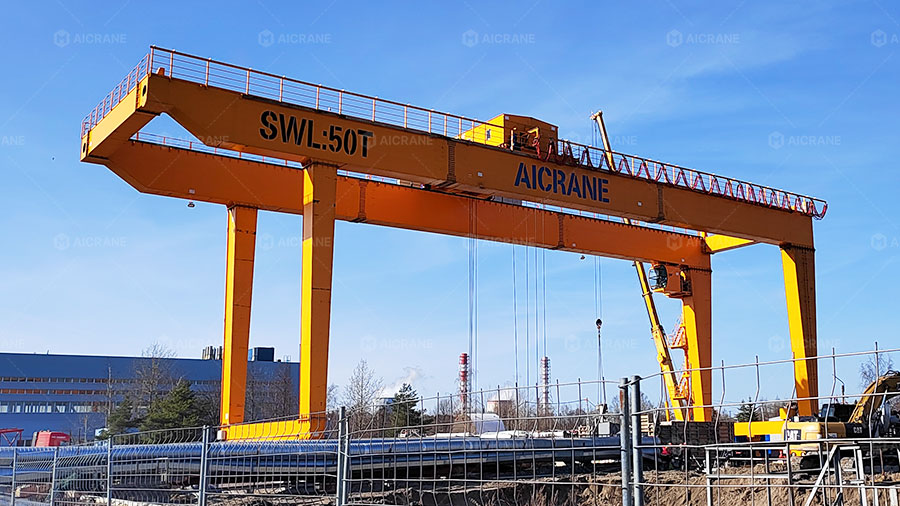
Purchasing a 50-ton gantry crane is a significant investment for any industrial operation. These cranes are essential for lifting and transporting heavy loads in steel mills, shipyards, construction sites, ports, and large-scale manufacturing plants. While the specifications of the crane—such as load capacity, span, lifting height, and operational duty – naturally affect its price, another critical factor often overlooked is the choice of branded versus non-branded components. This decision can have far-reaching implications, not only on the initial purchase cost but also on long-term operational efficiency, maintenance, safety, and overall return on investment (ROI).
Understanding Branded vs. Non-Branded Components
Branded components are products manufactured by well-known, established companies that have a reputation for quality, reliability, and consistency. Examples include ABB, Siemens, Schneider Electric, SEW, and Demag. These companies often follow stringent quality control standards, provide warranties, and offer global support networks. Branded components commonly found in a gantry crane for sale include motors, gearboxes, electrical systems, hoists, and control systems.
Non-branded components, on the other hand, are generally produced by lesser-known manufacturers or local suppliers. While these components may meet basic functional requirements and can often be procured at a lower cost, they may lack the rigorous quality testing, standardized performance, and long-term support associated with branded parts. Non-branded components can vary widely in quality, and their performance may be inconsistent.
Price Differences in 50-Ton Gantry Cranes
When considering a 50-ton gantry crane, the choice of components directly affects the initial purchase price. Branded components tend to increase the upfront cost of gantry crane significantly. For instance:
-
Motors and Drives: High-quality motors from ABB or Siemens provide better efficiency, smoother operation, and longer life. These can cost 20–40% more than equivalent non-branded motors.
-
Gearboxes and Hoists: Branded hoists and gearboxes are engineered to handle high loads consistently with minimal maintenance. Non-branded alternatives may initially seem cheaper but can wear out faster under heavy loads.
-
Electrical Control Systems: Using branded control panels and variable frequency drives (VFDs) ensures reliable operation and safety compliance. Non-branded panels may lack precision, leading to jerky crane movements and increased wear on mechanical components.
On the other hand, a crane built with non-branded components may appear attractive due to its lower upfront cost. For operations with tight budgets, this may seem ideal. However, these savings often come with hidden costs, including increased maintenance, higher risk of downtime, and shorter equipment lifespan.
Operational Reliability and Efficiency
The performance of a 50-ton gantry crane is only as good as its weakest component. Branded components generally provide:
-
Consistent Load Handling: Motors, brakes, and hoists from reputable brands are tested extensively for reliability under continuous heavy loads.
-
Smooth Operation: High-quality gearboxes and VFDs ensure precise speed control, reducing mechanical stress and energy consumption.
-
Reduced Downtime: Components with proven reliability minimize breakdowns, keeping operations running efficiently.
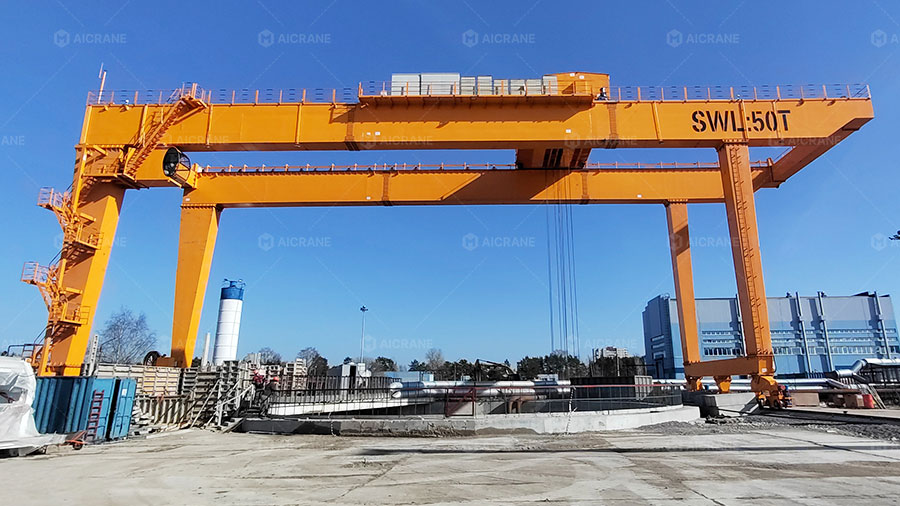
In contrast, non-branded components may compromise operational efficiency. Motors may overheat under prolonged use, hoists may slip or fail to lift precisely, and control systems may cause erratic crane movements. For a 50-ton double girder gantry crane, where heavy loads are frequent, these inefficiencies can significantly disrupt production schedules and increase operational costs.
Maintenance and Lifecycle Costs
Maintenance is a critical consideration when comparing branded and non-branded components. Branded parts typically come with:
-
Longer Lifespan: Motors, gearboxes, and hoists from established brands often have service lives that exceed those of generic components.
-
Easier Replacement: Branded components are standardized, making it easier to source replacements worldwide.
-
Professional Support: Manufacturers offer technical support, service manuals, and recommended maintenance schedules.
Non-branded components may require more frequent repairs, have shorter service intervals, and lack readily available replacements. For a 50-ton crane, frequent downtime for component replacement can lead to substantial operational losses over the crane’s lifespan, often outweighing any initial savings.
Safety Considerations
Safety is paramount when handling heavy loads with a 50-ton gantry crane. Branded components provide higher reliability, which directly contributes to safer operations. Features such as overload protection, precise braking systems, and emergency stop functions are more rigorously tested in branded components. Non-branded parts, particularly if sourced from manufacturers with lower quality standards, may fail under critical conditions, posing serious risks to personnel and equipment.
Energy Efficiency
Energy consumption is another area where branded components can justify higher costs. Modern, branded motors and VFDs are designed to operate efficiently under variable loads, consuming less electricity and producing less heat. This not only reduces operational costs but also minimizes wear on other crane components. Non-branded motors and drives may operate less efficiently, increasing energy bills and mechanical stress over time.
Case Study: Real-World Example
Consider two identical 50-ton gantry cranes operating in a steel mill:
-
Crane A is equipped with branded motors, hoists, and control systems.
-
Crane B uses non-branded components with lower initial cost.
After three years of continuous operation, Crane A exhibits minimal wear, operates smoothly, and requires only routine maintenance. Crane B, despite its lower initial investment, experiences motor overheating, frequent gearbox replacements, and inconsistent hoist performance. The steel mill incurs higher repair costs, operational delays, and unplanned downtime with Crane B, demonstrating that the initial savings were quickly offset by long-term expenses.
Making the Right Decision
When evaluating 50 ton gantry crane price, buyers should consider:
-
Total Cost of Ownership (TCO): Include maintenance, downtime, energy consumption, and replacement costs, not just the initial purchase price.
-
Operational Environment: High-demand applications like ports, steel mills, and shipyards benefit more from branded components due to heavy load cycles.
-
Supplier Reputation: Ensure that the manufacturer has experience and provides warranties for their components.
-
Spare Parts Availability: Branded parts are generally easier to source globally, reducing potential downtime.
-
Safety Compliance: Branded components are more likely to meet international safety standards.
Conclusion
The choice between branded and non-branded components significantly affects the price and long-term value of a 50-ton gantry crane. While non-branded components may reduce the initial investment, they can lead to higher maintenance costs, operational inefficiencies, reduced safety, and shorter lifespan. Branded components, though more expensive upfront, offer reliability, efficiency, safety, and long-term cost savings, making them a wise choice for critical industrial applications.
For companies investing in heavy-duty lifting equipment, the decision should focus on value over cost, ensuring that the crane operates safely and efficiently throughout its lifecycle. When it comes to a 50-ton gantry crane, quality components are not just a preference—they are a necessity.